It was August 1983. I was 18 years old. My Young Life leader — who seemed ancient to me at the time — was 24.
We boarded the Malibu Princess and the boat became its own world: kids everywhere, snack bar runs, the low hum of anticipation building the further north we traveled. And then, somewhere on the water, the energy shifted. We felt it before we could explain it. Everyone drifted to the railings. Then, out of nowhere, three ski boats came screaming around the bend — skiers flying, flags waving — a greeting that felt more like a declaration. We had arrived somewhere that mattered.
The walk into camp was long and unhurried — boardwalks and gravel paths carved into the mountain, salt water glittering below, boulders thick with moss, and the camp revealing itself slowly, in pieces, as if it didn't want to give everything away at once. By the time I reached Sitka 6, I already knew. This week would be different.
It was June 2026. I was 61 years old.
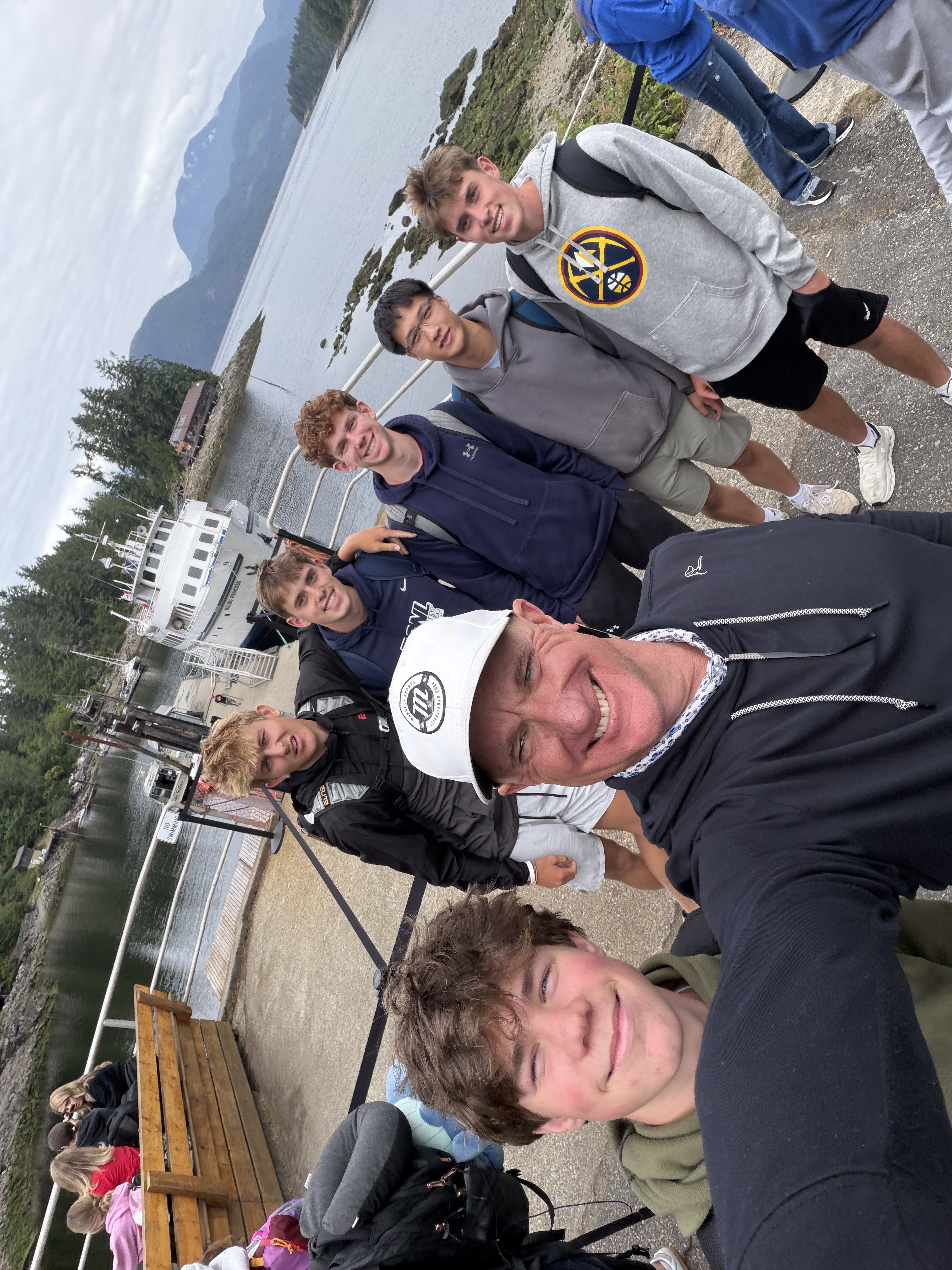
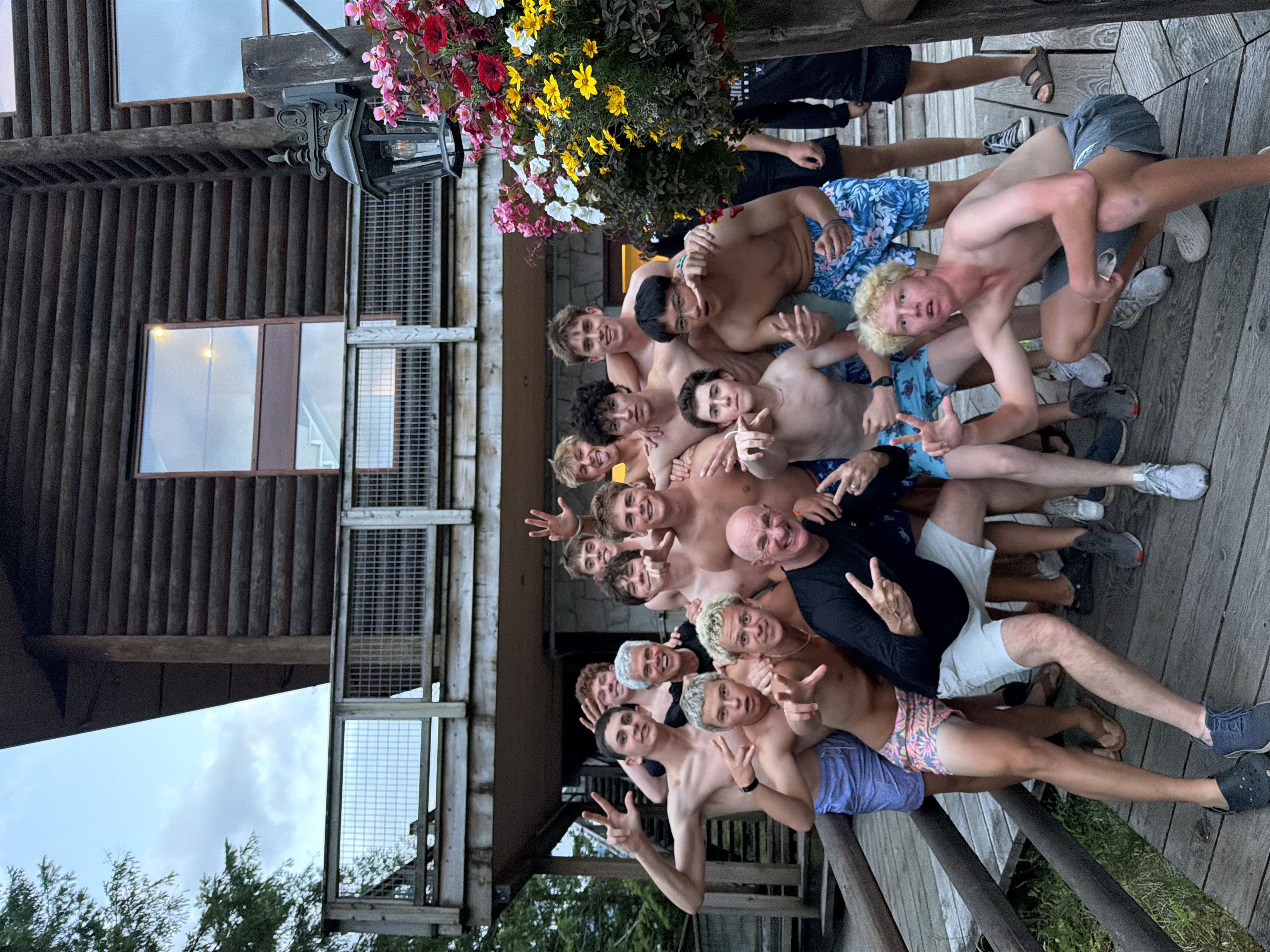
The students I was bringing were guys who had just finished their junior year at Cheyenne Mountain High School. We had spent the year together — in cars, at games, in living rooms, through a dozen ordinary and extraordinary moments. Now we were boarding the same Malibu Princess I had boarded 43 years before.
The dock was crowded with kids, luggage, and that same unmistakable mystique. For hours we roamed the boat, hit the snack bar, and let the anticipation build. As we came around the final bend, the energy shifted — exactly as I remembered — and we gathered at the railings. Out from the treeline, three ski boats came screaming toward us, skiers flying, flags waving.
Nothing had changed.
The walk into camp was the same half-mile I had walked at 18 — the same boardwalks, the same boulders, the same salt-kissed air, the same slow reveal of the place that had already gotten hold of me. I walked beside boys who were nearly the age I was the first time I made this walk, and I felt something I did not expect: not nostalgia exactly, but something fuller and a little harder to name.
We got to our cabin.
Sitka 6.
I smiled.
43 years of campers and leaders have walked these boardwalks. Thousands of 17-year-olds have stood at those railings, felt that shift in energy on the water, and walked the gravel path wondering what the week would hold. I can only speak to my own bookends of time — 1983 and 2026 — but in those two moments I found the same four through lines running like a river beneath everything:
Sitka. Sights. Sounds. Savior.
Sitka
Sitka 6 has a new door, an upgraded bathroom, and the same bunk beds. It smells exactly as you would expect a cabin of teenage boys to smell — wet towels, honest sweat, and the valiant but losing effort of somebody's body spray. Clothes hang from every surface. Water mysteriously collects on the bathroom floor within hours of arrival. Some things are not engineered out of existence. They are simply inherited.
But it is what happens on the floor of that cabin that has never changed — and never will.
Every night, after the noise and the laughter and the performances and the games, we came back to Sitka 6. And in that room, in the dark, in the quiet, boys said things out loud that they may have never said before. Some had never found a room safe enough to say them.
"I need to respect my mom more. She does so much for me."
"I don't think I will ever be good enough."
"I don't know what I want to do."
"I find myself without clarity, and I'm scared I'll never find it."
"I feel so much pressure."
"I want to follow God. I want to be who He wants me to be.”
I sat on the floor and listened to those voices and I thought: I said every one of those things once. In a cabin. Probably not far from this one. At 18, I thought the weight I carried was unique to me. Sitting there at 61, I understood it differently. The weight is not a flaw. It is the beginning of something.
Sights
You almost get used to it — and then you don't. Mountains. Snow on the peaks in June. A bald eagle riding a thermal off the ridge. Seals draped over the rocks like they own the place. A whale breaking the surface for no audience in particular. The tide coming in, going slack, pulling back out — three times daily, indifferent to the chaos of 373 campers.
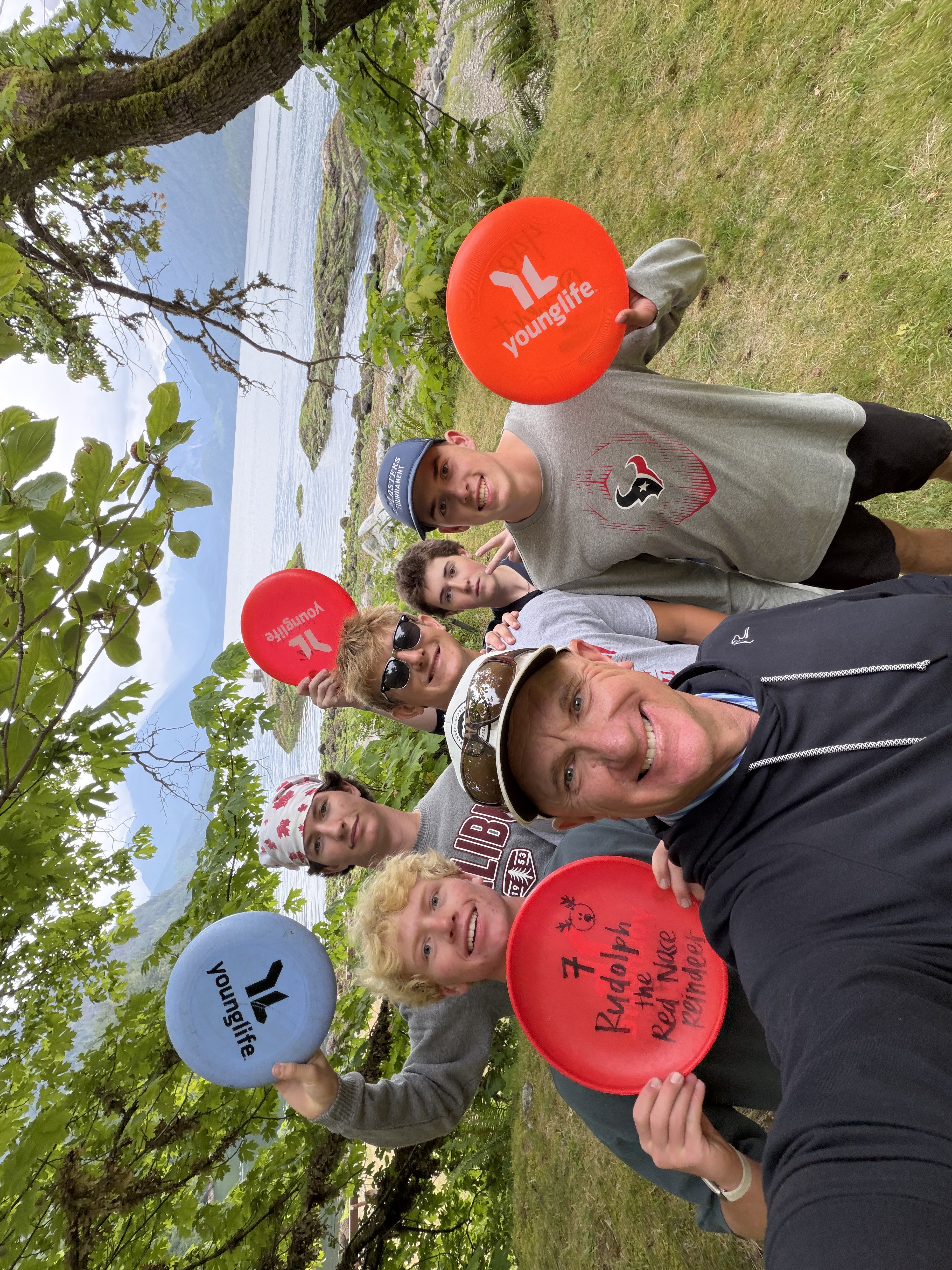
I watched one of my guys stop mid-frisbee-golf and just stare out at the water. He didn't say anything. He didn't need to. You know the look. It's the moment a place stops being scenery and starts being something else.
The most beautiful place I have ever been. I have heard it said by campers, by leaders, by people who have been to a lot of beautiful places. And they are not wrong. But I think what they are really saying is: this is the first place I have ever been where the beauty felt intentional. Where the geography felt like an argument.
You just know. It was put here by the Creator.
Sounds
The sounds are unchanged.
The early morning quiet — the kind that only exists above a certain latitude, where even the light seems to come in gently. The snap of a ski boat throttle opening up across the inlet, and then the sudden silence when a skier goes down. The dining room at full volume: 373 people eating well and talking loudly and laughing — always laughing. Malibu is full of laughter. I do not think that is accidental.
You know the sounds I did not hear – PHONES. No kids saying, “look at this,” no rings, no pings, no tings. Phones were turned in before we got onto the Princess and you know what sounds we didn’t hear any of: COMPLAINTS. This might have been the miracle of the week.
And then there are the sounds of surprise. The gasps. The moment the foam floods the dance floor and chaos erupts in the best possible way. The hush when we all sit down outside under the open sky — mountains above us, water below, a single long table stretching further than makes sense — and someone says grace. The particular silence of 373 people given 15 minutes alone with their Creator and choosing, most of them, to actually use it.
Those sounds get into you. I carried them home in 1983. I carried them home again in 2026.
Savior
I sometimes think the resistance to Malibu is real — that something does not want these kids to hear what they are about to hear against that backdrop. Long travel days. Border crossings that take hours. The small and large obstacles between a kid saying yes and a kid actually arriving at that dock. Every leader knows: getting them there is half the battle.
But there is a reason we fight for it.
Since 1953, speakers have taken that stage at Malibu to present the person of Jesus Christ — who He is, what He did, and what that means for a 17-year-old who doesn't know if he'll ever be good enough. Work crew, summer staff, and leaders have added their voices to that same chorus, week after week, decade after decade. The message has not changed because it does not need to.
The boys from Sitka 6 are home in Colorado now. They are still posting about Malibu. They are doing a devotional together — their idea, not mine. One of them said it simply:
"We want this Jesus at Malibu to make it back to Colorado Springs."
That sentence is why leaders go. That sentence is why the camp exists. That sentence is why a 61-year-old man boarded the Malibu Princess in June and walked the gravel path again and sat on the floor of Sitka 6 and listened.
It was a good week in 1983. It was a good week in 2026. I have left both times changed — which is the only honest thing I can say about what Malibu does to a person.
At 18, the week ended and I never once wondered if it would be my last. The future was endless and the return felt inevitable. This time was different. Walking back down that gravel path toward the Princess, I found myself thinking — quietly, not with grief, but with the weight of things honestly considered:
I wonder if I will ever come back.
I don't know the answer. But I know this: if I do come back, it will be the same. The ski boats will come screaming around the bend. The boulders will be thick with moss. The cabin will smell exactly as it should. And somewhere on the floor of Sitka 6, a boy will say something out loud for the first time — something true, something scared, something reaching toward hope — and a leader will sit across from him and recognize it.
Because he said it once too.
Photo Gallery